Supported by

Google Ukraine

Cuisine of Eastern Ukraine

Northern Ukraine Western Ukraine Southern Ukraine Central Ukraine Eastern Ukraine

About the region

Hard-working miners live in the east of Ukraine. Their food must be substantial and nutritious. Therefore, a lot of meat is eaten here, which gives strength to work. In the Donetsk region, a special dish - Donbas-style fore hock is cooked. This is a pork leg baked with spices. While in the Luhansk region, people prefer meat rolls. This very original dish consists of ground beef, omelet and boiled carrots. Also, eastern Ukrainians have a special love for okroshka. There are as many recipes for this dish as there are of borscht. Some people use whey as its basis, some use kvas, while the others prefer mineral water.

One of the most popular dishes of eastern Ukraine, along with beet soup, and okroshka is Donbas-style pork knuckles (golyashka). This is the part of the pig’s leg where the foot connects with the shoulder or hip, baked in foil or dough. Interestingly, in the days of Russia, knuckles were not cooked as a separate dish, rather used for soups or jellies. And the tradition of coocking knuckles came from Europe only in the 18th century. Later, Donbas-style pork knuckles (golyashka) became one of the key dishes on the holiday table. Moreover, two or three people may well be satisfied with one knuckle.

Hrechanyky is a traditional dish of Ukrainian cuisine, especially popular in the Lemko region. In fact, these are boiled buckwheat cutlets. They can be lean, but usually still contain minced meat. Mixing meat with buckwheat was invented to make the dish cheaper, but at the same time preserve both taste and nutritional value.

Hrechanyky that include meat should not be mixed up with other dishes that have the same name. For example, in the Poltava region, hrechanyky referred to dumplings, the dough for which was made of buckwheat flour. In addition, hrechanyky can be a dish that resembles pancakes made of buckwheat flour.

Kholodets is a cold meat dish common among the Slavic peoples of Eastern Europe.

It is believed that kholodets was cooked in the days of Kyivan Rus. This conclusion was prompted by historians to an interesting fact: in all East Slavic languages, this dish has the same name. This means that kholodets was invented at a time when there were no strong differences between languages.

Jelly, like most meat dishes, was prepared for major winter holidays, such as Christmas. The invention of gelatin contributed to the fact that kholodets began to be made less thick, and more refined ingredients - ham, mushrooms, various spices - began to be added instead of cartilage and bones. However, after the arrival of the Bolsheviks, all "bourgeois" recipes were taboo.

Bublyky (bagels) - a traditional dish of Ukrainian cuisine, which can be cooked from choux pastry or yeast dough. This product can be salty or sweet, lean or with poppy seeds, etc. 

Previously, the wealth of the family could be assessed by what kind of bublyky are present on the table. Poorer families could only afford lean bagels, while wealthier people served bublyky with poppy seeds and powdered sugar.

Bublyky were also used as decorations - they were hung along the oven. And this dish was an element of the wedding ceremony: the bride and groom wore a necklace of small bublyky around their necks. These decorations were to give wealth and prosperity to the new family.

Uzvar (compote) or, as it was also called kisselitsa, var, zvar, still remains one of the most popular drinks of Ukrainians. It is made from dried berries: pears, apples, plums, cherries, blueberries, in the southern regions uzvar made of apricots is quite widespread. Ukrainians dried the fruits in the sun, in ordinary or special ovens - dryers or baths.

The uzvar was cooked mainly in the oven both on holidays and on weekdays. Compote was the second most important dish after Christmas. The liquid was poured into a beautiful jug and placed next to the corner. The thick of the berries was poured into a bowl and also served to the table.

Kalganivka is one of the most popular traditional Ukrainian nastoikas, which is a horilka infused with the root of galangal (a herbaceous plant that grows mainly in forests). The drink has a reddish-amber color, a pleasant floral scent and is quite easy to drink. Kalganivka was often used for medicinal purposes and as a simple drink for the table.

Kotlyarevsky even mentioned it in the Aeneid, which indicates that it really is a drink with a long history.

With the advent of horilka in Ukraine in the fifteenth century, soon began to appear also many nasktoikas and liqueurs prepared on its basis. They were made mainly on berries (plums and cherries) or on herbs and roots of plants using 20-degree vodka, left to ferment in a warm room. Compared to liqueurs, tinctures were stronger and were considered a privileged drink. It was drunk and made by well-off people.

Horilka (vodka) is an alcoholic beverage made from a solution of ethyl alcohol (usually 40%). The name (from Ukrainian “hority” - “to burn”) is explained by the fact that to check the alcohol content in the drink it was set on fire. If the amount was sufficient, the liquid burned with a green-blue flame.

The first analogue of horilka was made in the X century by a Persian doctor. In Ukraine it appeared in the XV - XVI centuries. during the Cossacks. Moreover, at first it was called "hot wine", "bread wine" because it was made from cereals. And the word "horilka" began to be used only in the XVIII century. By the way, Ukrainians made horilka from wheat, while Russians made vodka from rye or a mixture of oats, rye and barley. In the Zaporozhian Sich, the production and export of "Cherkasy wine" (as it was then called) to various countries, including Moscovia, was established.

The classic value of ethanol content in the drink was 38%, but later a standard of strength of 40% was set for convenience.

Today Ukraine is considered one of the countries of the so-called "vodka belt" and is known for its classic wheat horilka infused on pepper.

Spotykach is a sweet alcoholic tincture with spices, (30 degrees in strength). In Ukraine, this drink appeared in the XVIII century. The name obviously comes from the effect that the “spotykach” (meaning “stumbling”) had on consumers. There are also options for preparing the drink not on spices, but on berries or with the addition of fruit juices.

The honey—based drink is perhaps the oldest known Slavic alcoholic beverage. Honey as a drink was incredibly popular in the days of Kievan Rus, when no feast or reception was held without it. Only during Lent did religion forbid drinking this drink. At the wedding, it was a tradition to give the newlyweds a tub of honey, which they had to drink during the first month of married life, perhaps this is where the term "honeymoon" comes from. In addition, honey had a ritual significance. It was shared with the gods and compared with the rivers of the afterlife, where honey and milk waters flow.

At first, it took years to prepare mead, because then honey was mixed with the juice of sour berries and left to ferment in tubs or vats. Then the liquid was poured and sealed in barrels underground for decades. This method was called put.

Later, hops were added to the honey—berry mixture before the fermentation process to speed up the process. This mead was stronger and could be drunk after two years.

Later, boiled honey appeared, when honey was first boiled with water (this decoction was called a sieve and was an independent non—alcoholic honey drink and an addition to many dishes).

In the 17th century, with the advent of wine and beer, mead lost its popularity. But in the twentieth century, the drink of mead became widespread, which continued the tradition. Then beekeeping became very common, a lot of so—called "immature honey" appeared, which could not be sold and they came up with a drink made by fermenting it with yeast.

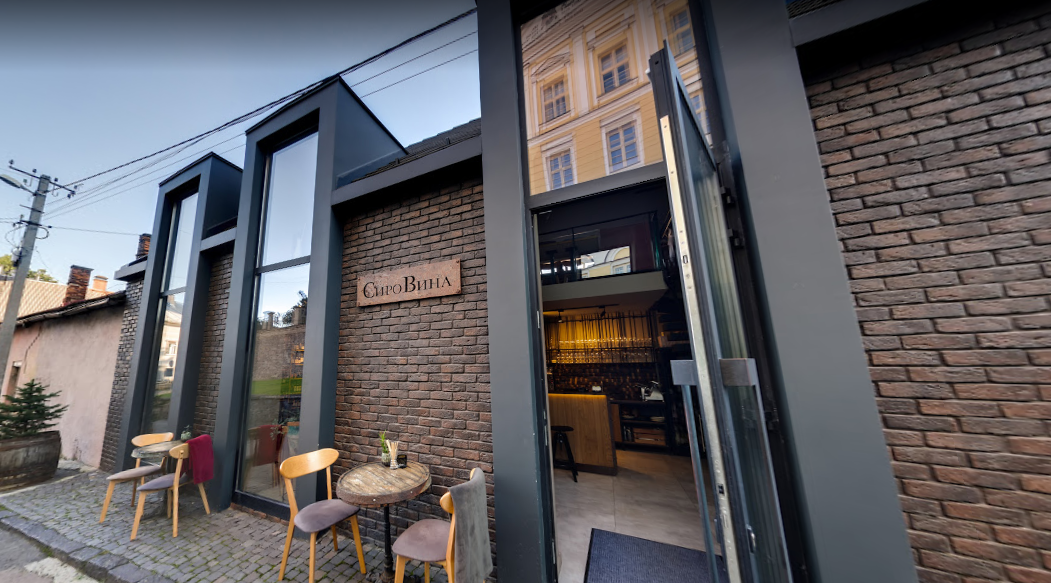
Compote is a traditional drink of Eastern European peoples, including Ukrainians. It is prepared from fruits and berries with sugar. Can be prepared from fresh, dryed (uzvar), canned or frozen fruits and berries. With the spread of freezers in households since the second half of the twentieth century the latter option has gained popularity.

Compote could be prepared from one type of berries or fruits, or from their mix. Apples, strawberries, cherries, raspberries, apricots, plums, and grapes were most often used in Ukraine.

In Soviet times, compote was also called a dessert, which was a berry (fruit) cooked in compote. They were served chilled in glasses or cups.

Okroshka is a traditional cold soup made mainly in eastern Ukraine.

The origin of okroshka is an open question, because no reliable historical evidence on this subject has survived to the date. However, most historians associate the appearance of okroshka with the baptism of Kievan Rus. According to the chronicles, after the act of baptism, Prince Vladimir ordered to distribute to the peasants "food, honey and kvas." Probably, after that kvas became widespread among commoners. Together with black bread and green onions, it became the basis for cold soup.

But the word "okroshka" became widespread only in the early twentieth century. It indicates the method of cooking okroshka: all the ingredients need to be finely chopped. By the way, almost anything can be the component of cold soup. Basic ingredients are cucumber, radish and green onion.

"The essence of culture - the desire of the collective soul of the people to express themselves"

(Oswald Spengler)